











Stainless Steel Cable Ties for Industrial and Marine Use
Quick Answer
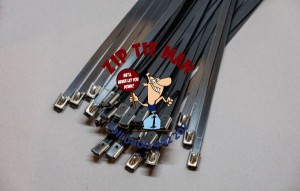
Stainless steel cable ties are used where standard nylon ties can't handle the heat, corrosion or load a job puts on them. Ours come in 304, 316 and nylon coated 304 grades with a self-locking head, sized at 4.6mm, 7.9mm and 12mm.
Why Stainless Steel Instead of Nylon
Nylon cable ties handle most bundling jobs well, but some environments break them down fast: constant heat, saltwater exposure, chemical contact, or ongoing UV without a break. Stainless steel doesn't have those weaknesses. It holds its strength and shape in conditions that would leave a nylon tie cracked or stretched out within months, which is why it's the standard choice for exhaust runs, marine fittings, and outdoor industrial work meant to last years, not seasons.
Choosing the Right Grade
304 Stainless Steel Good general purpose grade for industrial use, indoors or outdoors, with solid corrosion resistance for most Australian conditions.
Nylon Coated 304 Stainless Steel Same core strength as standard 304, with a coating added over the metal for extra abrasion resistance and electrical insulation. Useful where a bare metal tie could scratch a surface or create an electrical contact point you don't want.
316 Stainless Steel The step up for harsher environments. 316 handles saltwater, chemical exposure and coastal air better than 304, making it the grade to reach for on marine, offshore and coastal jobs where corrosion resistance matters most.
Sizes and Locking
Our stainless steel cable ties come in 4.6mm, 7.9mm and 12mm widths, each with a self-locking head for a secure, tamper-resistant hold once tensioned. As with any cable tie, match the width to your bundle diameter and the load it needs to carry, sold in packs of 100.
Where They Get Used
Stainless steel ties are common across construction, mining, marine, electrical and heavy industry work, anywhere a plastic tie would be under-engineered for the job. Exhaust systems, engine bays, outdoor electrical enclosures and marine rigging are typical applications where the extra cost of stainless pays for itself in service life.
Installation
For a clean, properly tensioned finish, we recommend using a stainless steel cable tie gun. It gets consistent tension across every tie rather than relying on hand strength alone, which matters more with stainless than with nylon since overtightening by hand is harder to judge.
Common Questions
What are stainless steel cable ties used for?
Heavy duty applications where strength and durability matter, including industrial, construction and infrastructure work, especially in conditions that break down standard nylon ties.
Are stainless steel cable ties suitable for marine use?
Yes, particularly 316 grade, which resists saltwater and chemical exposure better than 304, making it the standard choice for marine and coastal applications.
What's the difference between 304 and 316 stainless steel ties?
304 is a solid general purpose grade for most industrial use. 316 offers stronger corrosion resistance and is better suited to marine, offshore and coastal environments.
What's a nylon coated 304 tie used for?
It adds a coating over standard 304 stainless for extra abrasion resistance and electrical insulation, useful where a bare metal tie could scratch a surface or create unwanted electrical contact.
What tool do you recommend for installing stainless steel ties?
A stainless steel cable tie gun, which gives consistent tension and a clean finish across every tie.
What sizes do you stock?
4.6mm, 7.9mm and 12mm widths, each with a self-locking head, sold in packs of 100.